
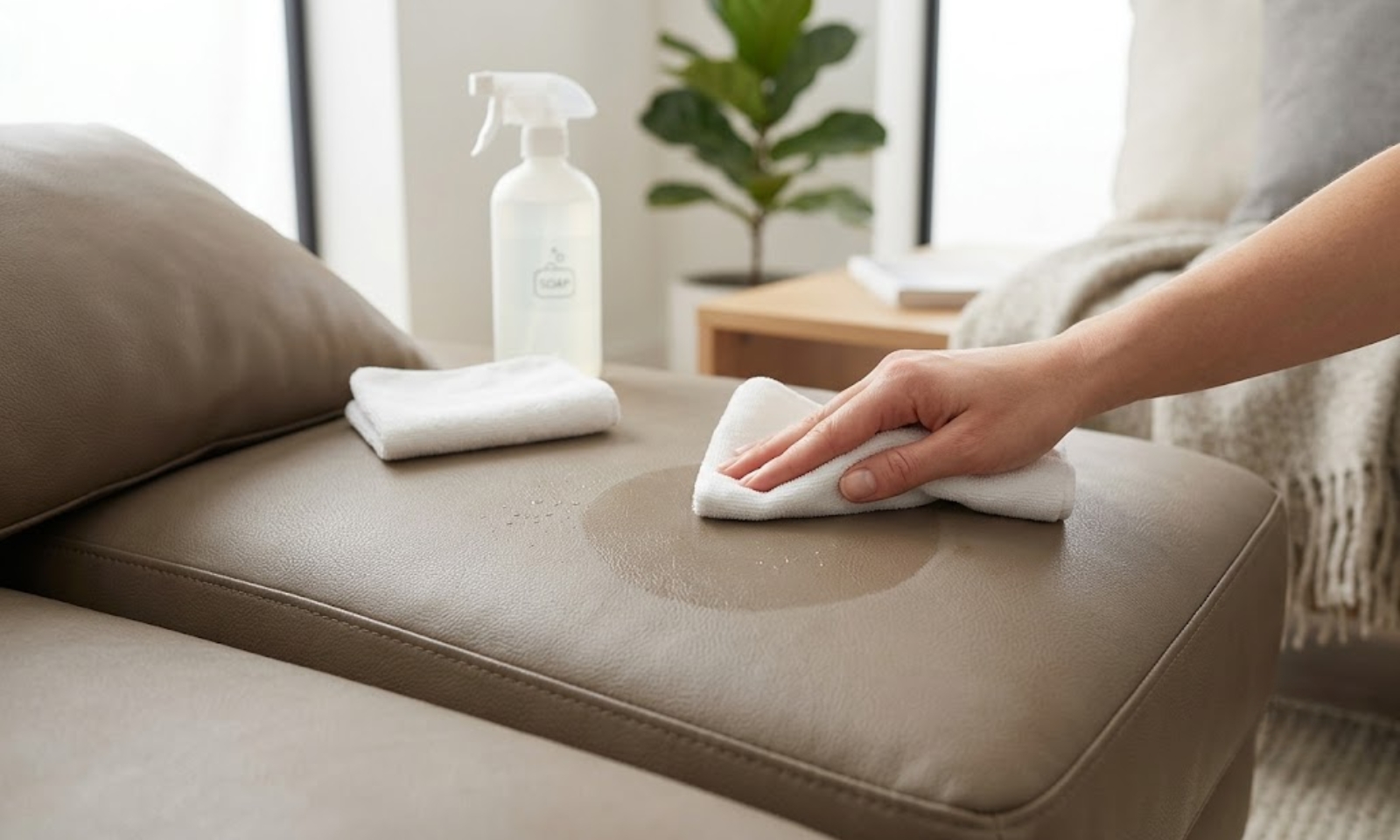
How to Clean Faux Leather Sofa: Easy Steps for Lasting Beauty
There is no need to pay the premium for genuine leather or put in the work it demands when a faux leather sofa can provide that same style. If you’re shopping for leather sofas, choosing quality materials makes maintenance easier.
Durable and simple to look after, it comes in an array of colors and finishes and has become a staple in modern homes. That said, some regular attention is called for to stave off early wear and keep things looking their best.
This guide will show you how to clean faux leather sofa furniture the proper way so it remains as attractive as the day you bought it, from safe surface cleaning to deep cleaning and stain removal. At Migeof, we believe proper furniture care extends the life of every piece.
Key Takeaways
- Keep dust and debris at bay to avoid dulling the finish or causing scratches.
- Harsh chemicals have no place on this material; stick with mild solutions.
- A spill left unattended can become a permanent mark, so treat stains right away.
- With routine wiping and the right care, your sofa will have a long life and stay clean.
Why Faux Leather Needs Proper Cleaning
In short, it is a synthetic made to replicate the look and feel of the real thing. Typically, you will find polyurethane (PU) or polyvinyl chloride (PVC) over a fabric base.
You won’t be conditioning it with leather oils as one would with genuine leather, yet it does require cleaning to ward off dirt and damage.
While authentic leather is prized for the patina it acquires, well-tended faux leather will hold its original appearance.
Common Causes of Dirt and Damage
Put a sofa through its paces, and it will pick up body oils, crumbs, and dust. Pet hair has a way of finding its way into the seams, and too much sun can lead to fading or cracking.
Then there is the matter of moisture, which can weaken the material if allowed to sit. Consistent cleaning keeps the color and texture intact by removing these elements before they cause any harm.
Supplies You Need Before You Start
Safe Cleaning Materials
It is best to have the right tools on hand to make the job go smoothly and spare the sofa from wear.
A microfiber cloth is ideal for lifting dust without marring the surface, and warm water with a bit of dish soap will handle everyday grime.
For application, a spray bottle works well, and a soft sponge is good for more tenacious spots. Have a dry towel within reach to take up any excess water.
What to Avoid
Certain products will only serve to shorten the life of your furniture. Bleach, rubbing alcohol, and other strong solvents are apt to discolor or crack the material, so leave them out of it.
The same goes for abrasive brushes and steam cleaners, which subject the surface to too much heat and moisture. Gentle tools and mild solutions are the surest way to protect the piece.
How to Clean Faux Leather Sofa Step by Step

Step 1: Vacuum the Surface
Use a vacuum with a soft brush to pick up loose pet hair and crumbs, focusing on the creases and corners where debris tends to accumulate.
If a vacuum is not an option, a dry microfiber cloth will do. Getting the surface dirt out of the way first is key to an effective cleaning and will prevent scratching.
Step 2: Prepare a Mild Cleaning Solution
Mix a few drops of mild dish soap into some warm water in a bowl or spray bottle. Do not be tempted by strong detergents with bleach or alcohol; they can compromise the protective coating.
As a precaution, put a little of the solution on an inconspicuous spot to see how the color and finish react.
Step 3: Wipe the Entire Sofa
Take a microfiber cloth or soft sponge and lightly dampen it. Work from the top of the sofa down in gentle circles so as not to redeposit dirt on areas you have already done.
Armrests and backrests will need a bit more focus. Should you come across a stubborn spot, let the cloth rest on it for a moment rather than scrubbing at it.
Step 4: Remove Soap Residue
Go over the cleaned sections with a fresh cloth and plain water to get rid of any leftover soap. Otherwise, you risk a film forming that will only attract more dust. Make sure the cloth is just damp, not wet.
Step 5: Dry the Surface
Right after wiping, place a dry towel on the sofa to soak up moisture, making sure to get into the folds and seams.
Let it air out in a room with some ventilation. Do not put it in direct sunlight or use a hair dryer; the heat could cause it to crack or fade.
Step 6: Buff for a Smooth Finish
When the piece is thoroughly dry, a quick buff with a clean microfiber cloth will restore its smoothness and remove any streaks.
Doing this every few weeks is all it takes to keep the sofa looking fresh. If you’re planning to upgrade, explore our modern sofas.
How to Remove Common Stains from Faux Leather
Food and Drink Stains
Do not rub a spill in; blot it with a dry cloth at once. Follow up by wiping with a microfiber cloth and some soapy warm water until the mark is gone. Rinse with clean water and dry it off. Prompt action is what keeps a stain from setting in.
Ink Stains
The sooner you deal with an ink mark, the better. Put a little mild soapy water on a soft cloth and lightly dab at the spot.
Do not rub hard, as this will only serve to spread the ink. Should the stain be stubborn, work on it gently until you see it start to go.
Grease and Oil
Start by blotting any grease with a dry paper towel to take up the oil. A damp microfiber cloth and mild soap will then clean the area.
It is best not to pour water directly on a greasy spot, as that can make the stain worse; simply wipe with clean water to finish and make sure the surface is well-dried.
Pet Accidents
These should be attended to right away with a dry cloth or paper towels. After that, use warm water and a bit of dish soap to clean the area, then rinse with clear water to remove any residue.
Be sure to let the surface dry out fully to avoid any lingering odors. Making a habit of regular cleaning helps keep the seating hygienic for the whole family.
Sticky Residue
For adhesive marks, a microfiber cloth with some mild soap is usually sufficient. Let the cloth rest on the spot for a moment or two to soften the residue before you wipe it off.
There is no need to scrape at it. If you have to, just repeat the process and then put a clean towel over the area to dry it.
If you’re considering a larger seating option, browse our leather sectional sofas.
How Often Should You Clean a Faux Leather Sofa?

Daily Care
Pick up any dust, pet hair, or crumbs with a dry microfiber cloth as needed. Spills must be wiped up on the spot to stop them from turning into stains.
Weekly Cleaning
Once a week, passing a slightly damp cloth will take care of fingerprints and the usual dirt, giving the sofa a tidy look.
Monthly Maintenance
Once a month is a good time for a more thorough job with warm water and dish soap. Look in the corners and seams of the cushions for any debris that has worked its way in.
Seasonal Deep Cleaning
Every three or four months, give the sofa a proper deep clean, from vacuuming to buffing, to get rid of built-up grime and keep the original finish intact.
Mistakes That Can Damage Faux Leather
Faux leather is tough, but it can be ruined by improper cleaning.
- Harsh chemicals like ammonia, bleach, or strong solvents are a mistake; they will strip the protective layer and cause discoloration that cannot be fixed.
- The same goes for using stiff brushes, which can mark the smooth surface. And while the material is water-resistant, do not drench it.
- Too much water can find its way into the seams and weaken the backing. A lightly dampened cloth is all that is needed.
- Neglecting to clean regularly means body oils and dust will accumulate, making high-use areas look dull and wear down faster.
- Direct sun and heat from radiators can also lead to peeling or cracking.
- Then there are the small stains; it is far easier to handle a fresh spill than one that has dried for days.
Tips to Keep Your Faux Leather Sofa Looking New
Some easy tips for preserving the look of your sofa include keeping it away from fireplaces and heating vents. If it sees a lot of use, a decorative throw can spare the high-contact spots from daily wear.
Make sure to rotate the loose cushions now, and then so they do not develop permanent impressions.
Watch out for keys or pet claws that might leave a scratch. With a little gentle care, the sofa will remain in fine condition for years.
With a little gentle care, even modular leather sofas can remain in excellent condition for years
Conclusion
To sum up, the key to protecting your furniture is to know how to clean faux leather sofa surfaces properly. Do not put off dealing with a mess.
A few minutes of attention each week will ensure the sofa is still a stylish and comfortable part of your home down the road. Browse our Office Furniture Solution for more furniture ideas.
Also see:
FAQs
What is a natural way to clean faux leather?
A soft microfiber cloth and a mixture of warm water with a couple of drops of dish soap will safely take care of everyday dirt. Just be sure to remove the soap and dry the sofa afterward.
Is vinegar safe to use?
In small, diluted quantities, white vinegar can tackle light stains, but proceed with caution. Some finishes do not take kindly to acid, so try it in an inconspicuous place first.
What should you never use on faux leather?
Bleach, rubbing alcohol, steam cleaners, and abrasive brushes have no place on faux leather. They are likely to cause the surface to crack, peel, or fade.
How do you make faux leather look new again?
Consistent care is what makes the difference. Clean and dry it thoroughly, buff with a microfiber cloth, and shield it from the elements. That is how you keep the finish smooth and the appearance fresh.